

According to the latest legal regulations applicable from 2026, foreign e-commerce platforms operating in Vietnam (using the Vietnamese language, having a .vn domain name, or reaching a certain transaction threshold) must comply with a stricter legal framework regarding local presence and financial responsibility:
- Requirements for establishing a presence: Foreign operators of intermediary e-commerce platforms or social networks with online ordering functions are required to designate a legal entity in Vietnam. In cases where international treaties provide otherwise, the enterprise must appoint an authorized legal entity and make a security deposit at a Vietnamese bank to protect consumers’ interests.
- Functional-based regulatory classification: Platforms without online ordering functions are only required to appoint an authorized representative, whereas platforms with online ordering functions must establish a legal entity to directly assume responsibility for product quality, handle violations, and coordinating the removal of infringing information at the request of competent state authorities.
Note: The management and operation of intermediary e-commerce platforms, social networks engaged in e-commerce activities, and integrated e-commerce platforms are business lines subject to conditional market access under the List of sectors with restricted market access for foreign investors in accordance with investment laws.

1. Mandatory requirements for foreign e-commerce platforms conducting e-commerce activities in Vietnam
The E-commerce Law 2025, for the first time, specifically stipulates mandatory conditions that global e-commerce giants must comply with when conducting e-commerce activities in Vietnam. This is considered necessary in the context of digitalization, technological development, and the growing “online” trend in daily life. Therefore, ensuring consumer protection, maintaining balance and creating favorable conditions for domestic e-commerce enterprises to operate, as well as requiring all parties to operate within a clear legal framework, are essential.
- Foreign e-commerce platforms conducting e-commerce activities in Vietnam are foreign e-commerce platforms whose operators are foreign organizations legally established and operating under foreign laws and that provide mechanisms allowing the display language to be selected as Vietnamese, or use Vietnam’s country-code top-level domain “.vn”, or reach a transaction threshold with buyers in Vietnam. This does not include direct e-commerce platforms that sell goods/services themselves and do not have online ordering functions.
- Operators of foreign direct e-commerce platforms with online ordering functions must designate a legal entity in Vietnam under authorization before the platform provides the option to display in Vietnamese or uses Vietnam’s country-code top-level domain “.vn”, or upon reaching the transaction threshold with buyers in Vietnam, unless otherwise provided by law.
- Operators of intermediary e-commerce platforms without online ordering functions, or social networks engaged in e-commerce activities without online ordering functions, must appoint an authorized representative in Vietnam before the platform provides the option to display in Vietnamese or uses Vietnam’s country-code top-level domain “.vn”, and must meet the conditions applicable to the management and operation of e-commerce platforms.
- Operators of intermediary e-commerce platforms with online ordering functions, social networks engaged in e-commerce activities with online ordering functions, and integrated e-commerce platforms must establish a legal entity in Vietnam before the platform provides the option to display in Vietnamese or uses Vietnam’s country-code top-level domain “.vn”, or upon reaching the transaction threshold with buyers in Vietnam, unless otherwise provided by law.
In cases where an international treaty to which the Socialist Republic of Vietnam is a party contains commitments prohibiting the requirement to establish a legal entity, operators of intermediary e-commerce platforms with online ordering functions, social networks engaged in e-commerce activities with online ordering functions, and integrated e-commerce platforms are not required to establish a legal entity; however, they must comply with the following requirements: Designate a legal entity in Vietnam under authorization; Make a security deposit at a commercial bank in Vietnam or a branch of a foreign bank in Vietnam to compensate consumers for damages and fulfill financial obligations to the State; Comply with the conditions for the management and operation of e-commerce platforms.
2. Responsibilities of operators of foreign e-commerce platforms conducting e-commerce activities in Vietnam and related parties
According to the E-commerce Law 2025, enterprises, organizations, and individuals that authorized to manage, operate, and take responsibility for all activities of an e-commerce platform are defined as the “operators of e-commerce platforms.”
Depending on the functions of foreign e-commerce platforms when operating in Vietnam, the responsibilities of the operators vary. For more details on this matter, you may refer to the article on the responsibilities of e-commerce platform operators here.
3. For other related parties participating on foreign e-commerce platforms
In addition to the platform operator, other parties participating on foreign e-commerce platforms are also clearly assigned specific responsibilities, as follows:
Livestream sellers on foreign e-commerce platforms conducting e-commerce activities in Vietnam are responsible for:
- Providing information to the e-commerce platform operator to facilitate the verification of the identity of the livestream seller.
- Complying with the livestream selling regulations that have been publicly announced on the platform during the livestream selling process.
- Refusing to cooperate when the seller fails to provide sufficient information as required by regulations.
- Not providing false or misleading information regarding the functions, origin, quality, price, promotion policies, warranty, and other contents related to goods and services.
- Implementing advertising content that has been approved by competent state authorities for goods and services for which advertising content confirmation is required by law.
- Not using language, images, clothing, or behavior that are contrary to social ethics and cultural traditions during livestream selling.
- Ceasing cooperation, stopping the livestream, and removing displayed information immediately upon detecting violations or upon request from the seller or competent state authorities regarding unlawful acts.
Affiliate marketers on foreign e-commerce platforms conducting e-commerce activities in Vietnam must fulfill the following responsibilities:
- Provide information to organizations or individuals providing affiliate marketing services for the purpose of identity verification;
- Refuse to carry out affiliate marketing on digital platforms that have been publicly announced by competent state authorities as violating laws on national security, social order, and social safety, or on digital platforms operating under a multi-level marketing model without a certificate of registration for multi-level sales activities;
- Refuse to conduct affiliate marketing associated with content that uses language, images, clothing, or behaviors contrary to social ethics and cultural traditions;
- With respect to established access links, referral codes, or similar methods, affiliate marketers in e-commerce must perform the following responsibilities: Remove links related to goods or services that violate the law or upon request of competent state authorities; Provide information on affiliate marketing activities in e-commerce upon request from the state management authority for e-commerce.
Responsibilities of the authorized representative in Vietnam for intermediary e-commerce platforms without online ordering functions and social networks engaged in e-commerce activities without online ordering functions:
- Must be authorized to carry out legal procedures related to e-commerce activities with competent state authorities;
- Comply with the requests of competent state authorities in resolving disputes and complaints, and in investigating and handling violations of the law;
- Submit periodic online reports through the E-commerce Activity Management System or as required by competent state authorities.
Responsibilities of the authorized legal entity in Vietnam for direct e-commerce platforms with online ordering functions, intermediary e-commerce platforms with online ordering functions, and social networks engaged in e-commerce activities with online ordering functions
- Carry out legal procedures related to e-commerce activities with competent state authorities;
- Conduct inspections, reviews, and promptly handle cases when violations of the law are detected or reported; remove information about goods or services that violate the law upon receiving requests from competent state authorities in accordance with government regulations;
- Coordinate in resolving feedback, requests, and complaints from buyers in Vietnam regarding goods and services;
- Receive information and coordinate in handling cases where goods provided by sellers do not match the contents that have been notified, announced, listed, advertised, introduced, transacted, and committed to on the platform;
- In cases where defective goods are detected in accordance with laws on consumer protection, request the platform operator to publicly disclose the information on the platform, directly notify buyers, and coordinate in recalling the goods. The determination of liability, the handling of defective goods, and compensation for damages shall be carried out in accordance with civil law and consumer protection laws;
- Fulfill the responsibilities of platform operators as stipulated in the E-commerce Law 2025, as well as comply with legal regulations on data, cybersecurity, product and goods quality, advertising, consumer protection, and other relevant legal provisions.
Overall, the introduction of the E-commerce Law 2025 and the strict regulations applied from 2026 are not merely administrative barriers, but a strategic step aimed at standardizing the e-commerce “playing field” in Vietnam. Requiring foreign “giants” to establish a legal presence or appoint an authorized legal entity, together with the obligation to make a bank security deposit, represents a strong commitment by the State to protect consumers’ rights and create a fair competitive environment.
For platform operators, this is the time to review their operational models to ensure alignment between technological deployment and compliance with local laws. Meanwhile, participants directly involved, such as livestream sellers or affiliate marketers, also need to clearly recognize their responsibilities regarding honesty and professional ethics in order to avoid unfortunate legal risks. In a borderless digital economy, compliance is no longer a cost burden, but rather an “identity card” that helps businesses and individuals establish credibility and achieve sustainable development in the Vietnamese market.
-
Advisory email: info@cdlaf.vn
-
Hotline: (+84) 909 668 216
Time of writing: 10/02/2026
The article contains general information which is of reference value, in case you want to receive legal opinions on issues you need clarification on, please get in touch with our Lawyer at info@cdlaf.vn
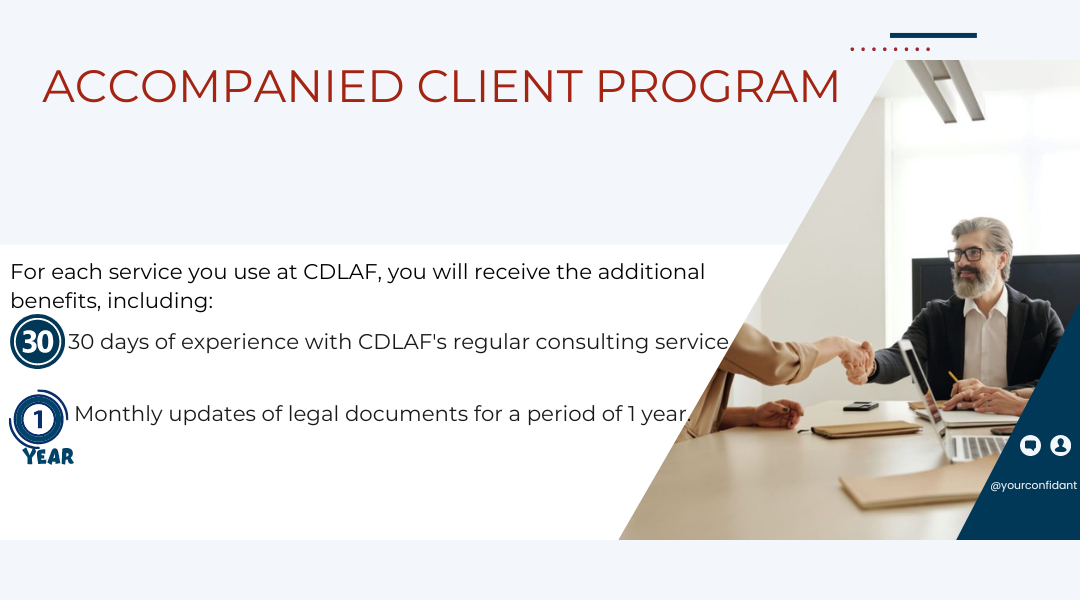
Why choose CDLAF’s service?
- We provide effective and comprehensive legal solutions that help you save money and maintain compliance in your business;
- We continue to monitor your legal matters even after the service is completed and update you when there are any changes in the Vietnamese legal system;
- Our system of forms and processes related to labor and personnel is continuously built and updated and will be provided as soon as the customer requests it;
- As a Vietnamese law firm, we have a thorough understanding of Vietnam’s legal regulations, and grasp the psychology of employees, employers, and working methods at competent authorities;
- CDLAF’s team of lawyers has many years of experience in the field of labor and enterprises, as well as human resources and financial advisory.
- Strict information security procedures throughout the service performance and even after the service is completed.
You can refer for more information:
- E-commerce Law 2025: Mandatory Obligations for Platform Management Entities from July 2026
- 05 new points of the Law on investment 2025 effective from March 01, 2026
- State-owned enterprises’ management of subsidiaries and Capital contributions
- Salary, remuneration and bonus regime in state-owned enterprises (2026)